Most people know they should go. Fewer know what actually happens.
Dental cleanings get recommended at every checkup, talked about in every oral health guide, and scheduled twice a year for good reason. But a surprising number of people sit in the chair without really knowing what is being done to their teeth and why each step matters.
If you have ever been curious about the process, or if dental anxiety makes you want to know exactly what to expect before you arrive, this walkthrough is for you. Understanding what happens during a professional cleaning at Frederick Dental removes the mystery and, for most patients, significantly lowers any tension around the appointment.
Why professional cleanings are not optional
No matter how well you brush and floss at home, there are areas of your mouth you simply cannot reach effectively. Plaque, the soft bacterial film that forms on teeth throughout the day, hardens into tartar (also called calculus) when it is not removed within about 24 to 72 hours. Once it has hardened, no amount of brushing at home can remove it. Only professional instruments can.
Tartar buildup along the gum line is one of the primary drivers of gingivitis and, left longer, full periodontal disease. Regular professional cleanings break that cycle before it becomes a problem. The Canadian Dental Association recommends seeing a dental professional every six months for cleanings and exams, though some patients with a history of gum disease benefit from more frequent visits.
Dental cleanings also connect to your broader health. Research consistently links gum disease to elevated risks of cardiovascular disease and diabetes complications. If you want to understand more about that connection, the Frederick Dental article on dental cleanings and overall wellness covers it in detail.
Step by step: what happens during your cleaning
The initial oral exam
Before any instruments come near your teeth, the dental hygienist examines your mouth using a small mirror. They are checking for obvious concerns: signs of inflammation, redness along the gum line, areas of visible tartar buildup, and anything that warrants a closer look before cleaning begins.
If something significant is found, the hygienist will flag it for the dentist before proceeding. This is also a good moment to mention anything that has been bothering you, including sensitivity, a sore spot, or a filling that feels off.
Plaque and tartar removal (scaling)
This is the core of professional cleaning. Using a scaler, the hygienist carefully removes plaque and tartar from the surface of each tooth and along the gum line. You will hear some scraping, and that sound is completely normal. The more tartar present, the longer this step takes.
Some practices use an ultrasonic scaler for larger deposits. This instrument uses gentle vibration and a stream of water to break up hardened buildup. It is more efficient for significant accumulation and just as safe as a manual scaler.
Scaling is the step that home brushing cannot replicate. No matter how thorough your routine, a scaler removes what your toothbrush cannot.
Polishing
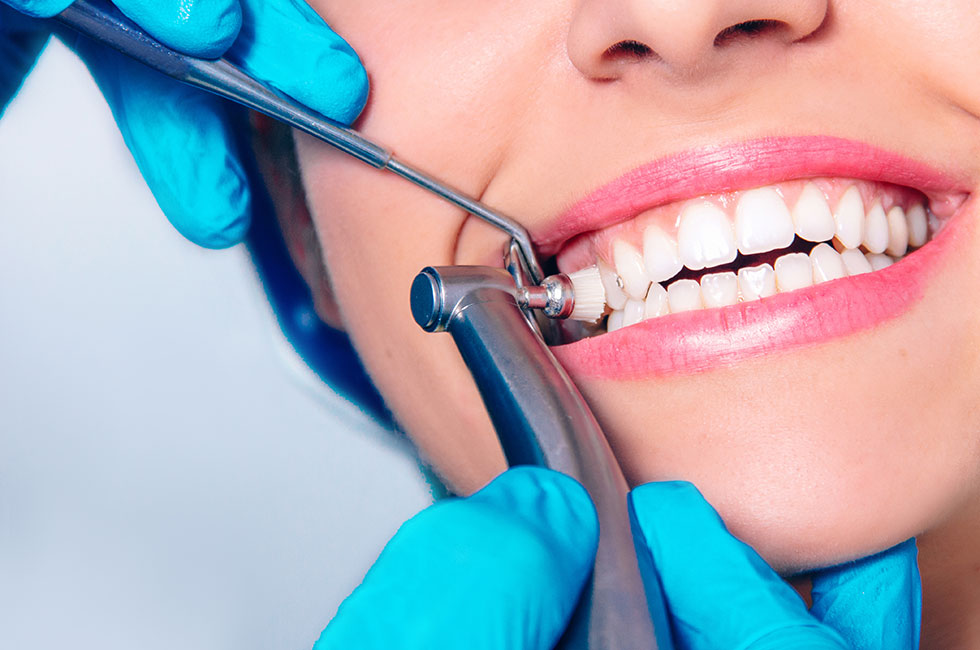
Once scaling is complete, the hygienist uses a high-powered electric brush with a slightly gritty polishing paste to clean the surface of each tooth. The paste is mildly abrasive and removes surface stains while leaving teeth smooth and bright.
The smoothing effect is not just cosmetic. A polished tooth surface makes it harder for plaque to grip and accumulate before your next visit. Most hygienists let you choose from a few flavours of polishing paste before they begin.
Professional flossing
Even if you floss every day, professional flossing is different. The hygienist gets between every tooth and down to the gum line with precision, clearing out any debris that the scaling and polishing loosened. They also note where bleeding occurs, which is a useful indicator of gum health and a point of discussion with the dentist.
Fluoride treatment (where recommended)
Depending on your oral health, age, and risk of cavities, the hygienist may apply a fluoride treatment at the end of the appointment. Fluoride strengthens the outer layer of enamel and provides some protection against decay between visits.
This step typically takes about a minute. The fluoride is applied as a foam, gel, or varnish and is left briefly in contact with the teeth before being rinsed.
The dentist’s examination
After the hygienist has completed the cleaning, the dentist comes in to perform a comprehensive exam. This is not a repeat of what the hygienist did. The dentist reviews X-rays (taken during this visit or at a recent prior visit), checks for cavities, assesses bite alignment, examines gum tissue health, and screens for early signs of oral cancer.
If there is anything that needs attention, whether a small cavity, an area of gum recession, or a filling that is wearing down, you will be told clearly and given options before any further treatment is discussed.
What a cleaning actually feels like
Most cleanings are comfortable. You may feel some pressure and hear sounds that feel more intense than they are. The scraping during scaling is the part patients most commonly find uncomfortable, and it tends to be more noticeable if it has been longer than six months since your last appointment.
If you have particularly sensitive teeth or gums, mention it before the appointment starts. The hygienist can adjust technique, recommend a desensitizing product, or simply let you know what to expect at each stage.
Cleanings should not hurt. If they do, that is worth telling your hygienist right away.
How long does a cleaning take?
A routine cleaning typically takes between 45 minutes and one hour. If X-rays are being taken or if it has been a longer time since your last visit and more tartar has built up, the appointment may run slightly longer. Showing up consistently every six months is one of the most practical things you can do to keep each appointment efficient.
What to know about dental cleaning costs in Kitchener
Most dental insurance plans in Ontario cover routine preventive care, including cleanings and exams. If you have private coverage, check your plan details for annual cleaning limits and whether your visit falls within your benefit period.
Frederick Dental also accepts the Canadian Dental Care Plan (CDCP), which helps eligible Canadians reduce or eliminate out-of-pocket costs for preventive dental services, including cleanings and exams. If you think you may qualify, the team can help you verify coverage at your visit.
For patients without insurance, flexible payment options are available. Frederick Dental’s mission is that no one should be denied essential dental care due to financial barriers.
Book your dental cleaning in Kitchener
The Kitchener dentist team at Frederick Dental welcomes patients of all ages for routine cleanings, comprehensive exams, and a full range of dental services. Dr. Albogha and the team are known for clear communication, gentle care, and a bright, comfortable office on the second floor of 447 Frederick Street.
Evening and weekend appointments are available to fit around busy schedules. Whether you are booking your first visit or returning after a gap, new patients are always welcome.
Call (519) 513-4550.
Frederick Dental 447 Frederick St, Suite 200, Kitchener, ON N2H 2P4 Evening and weekend appointments available. Accepting the Canadian Dental Care Plan (CDCP)