Teeth whitening is one of the most requested cosmetic dental treatments today. Many patients want a brighter, more confident smile, but not all tooth discoloration is the same. Some people have surface stains from coffee or wine, while others have naturally yellow-toned teeth due to genetics or enamel thickness.
At Frederick Dental, patients often ask whether whitening works equally well for both types of discoloration. If you are considering professional teeth whitening in Kitchener, understanding the difference between stained teeth and naturally yellow teeth can help set realistic expectations.
Understanding the Two Main Types of Discoloration
Before discussing whitening effectiveness, it is important to understand why teeth appear discoloured.
Extrinsic Stains
Extrinsic stains occur on the outer layer of the tooth, known as enamel. These stains are usually caused by lifestyle habits such as:
- Coffee and tea consumption
- Red wine
- Tobacco use
- Dark-colored foods
- Poor oral hygiene
These stains sit on the surface and are often easier to remove.
Intrinsic or Natural Yellow Tone
Some people have teeth that appear more yellow, even with good oral hygiene. This can happen because:
- Enamel is naturally thinner
- Dentin, the inner layer of the tooth, is more visible
- Genetics influence tooth colour
- Aging causes enamel to wear down
In these cases, the yellow appearance is not simply a surface stain.
How Professional Whitening Works
Professional teeth whitening in Kitchener uses bleaching agents designed to break down stain molecules inside the enamel. These agents penetrate the tooth structure and lighten the overall shade.
Unlike over-the-counter products, in-office whitening treatments are carefully monitored and use higher-strength solutions for more noticeable results.
At a Dental Clinic Kitchener patients trust, whitening treatments are customized to your specific needs and oral health condition.
Whitening Stained Teeth
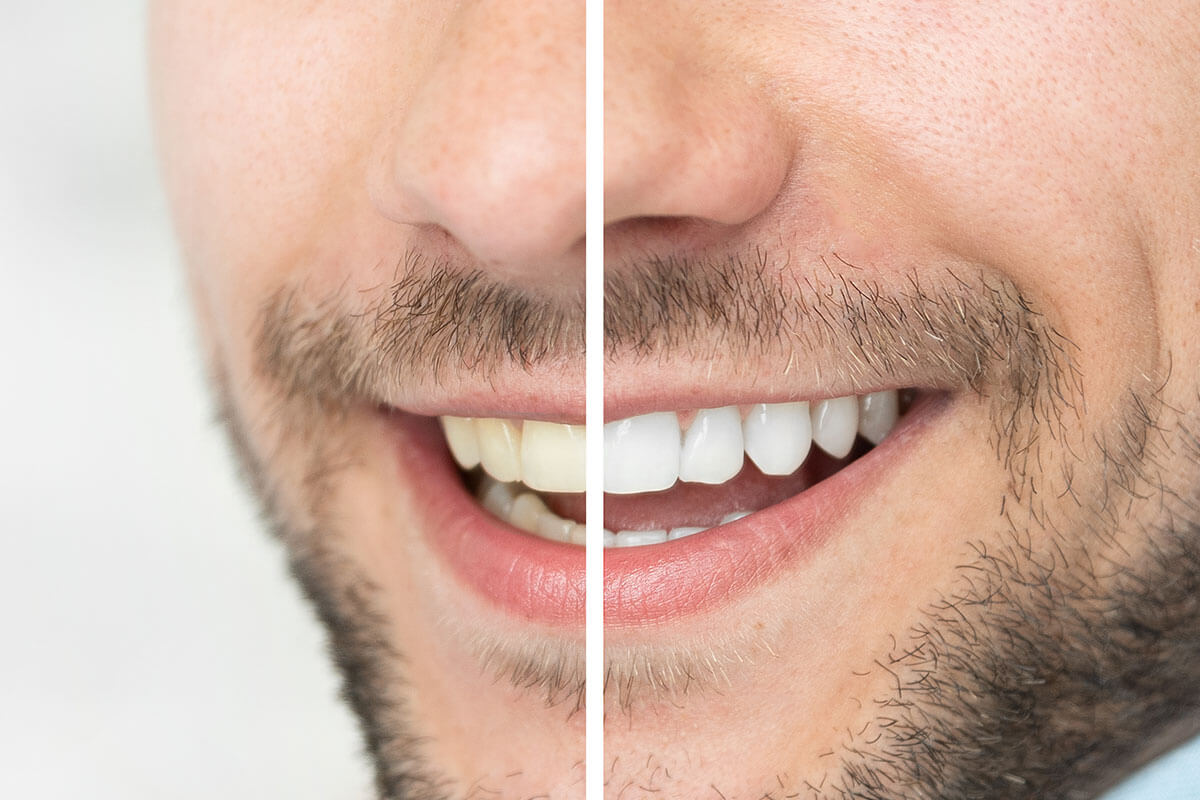
For patients with extrinsic stains, whitening often produces dramatic results. Since these stains are located on or near the surface, they respond well to bleaching agents.
Many patients notice:
- A brighter overall shade
- Reduced discoloration from beverages
- Improved uniformity
- Visible change after a single session
Professional whitening is especially effective when combined with a professional cleaning beforehand, which removes plaque and surface buildup.
Whitening Naturally Yellow Teeth
For naturally yellow teeth, results can still be positive, but expectations should be realistic.
Because natural yellow tones are often influenced by dentin colour and enamel thickness, whitening may lighten the shade but not eliminate the underlying tone.
Patients with thinner enamel may notice:
- Gradual brightening rather than dramatic whitening
- Improvement in overall brightness
- More even coloration
Your dentist will evaluate your starting shade and discuss achievable results before beginning treatment.
Does Age Affect Whitening Results?
Yes, age can influence whitening outcomes. As we age, enamel naturally becomes thinner, making dentin more visible. This can cause teeth to appear darker or more yellow over time.
While whitening can still improve brightness, older patients may require additional sessions or maintenance treatments to maintain results.
When Whitening May Not Work the Same
Certain types of discoloration may not respond well to traditional whitening, including:
- Gray or brown discoloration from certain medications
- Stains from trauma
- Fluorosis
- Restorations such as crowns or veneers
Whitening agents do not change the colour of dental restorations. If you have visible crowns or fillings, your dentist may discuss alternative cosmetic options.
A consultation at Frederick Dental ensures that whitening is appropriate for your situation.
The Importance of a Professional Assessment
Before beginning any whitening treatment, a dental exam is recommended. Your Dental Clinic Kitchener provider will:
- Assess the cause of discoloration
- Check for cavities or gum issues
- Evaluate enamel health
- Recommend the safest and most effective approach
Attempting whitening without professional guidance may lead to sensitivity or uneven results.
Managing Sensitivity During Whitening
Some patients experience temporary tooth sensitivity during or after whitening. This is more common in individuals with thinner enamel.
Professional treatments include measures to minimize discomfort, and your dentist can recommend desensitizing products if needed.
Sensitivity typically resolves within a few days.
Maintaining Your Results
Whether your discoloration was caused by staining or natural tone, maintaining results requires good oral hygiene and lifestyle awareness.
Tips for prolonging whitening results include:
- Brushing twice daily
- Flossing regularly
- Limiting staining beverages
- Using a straw for dark drinks
- Scheduling routine dental cleanings
Periodic touch-up treatments may also be recommended.
Setting Realistic Expectations
Teeth whitening can be highly effective for both stained and naturally yellow teeth, but results may vary depending on the underlying cause of discoloration.
Patients with surface stains often see more dramatic improvement. Those with naturally yellow teeth can still achieve a brighter smile, though the final shade may remain within a natural range.
If you are considering professional teeth whitening in Kitchener, schedule a consultation at Frederick Dental. A personalized evaluation will help determine the best approach for your smile and ensure safe, predictable results at a trusted Dental Clinic that Kitchener residents rely on for cosmetic care.